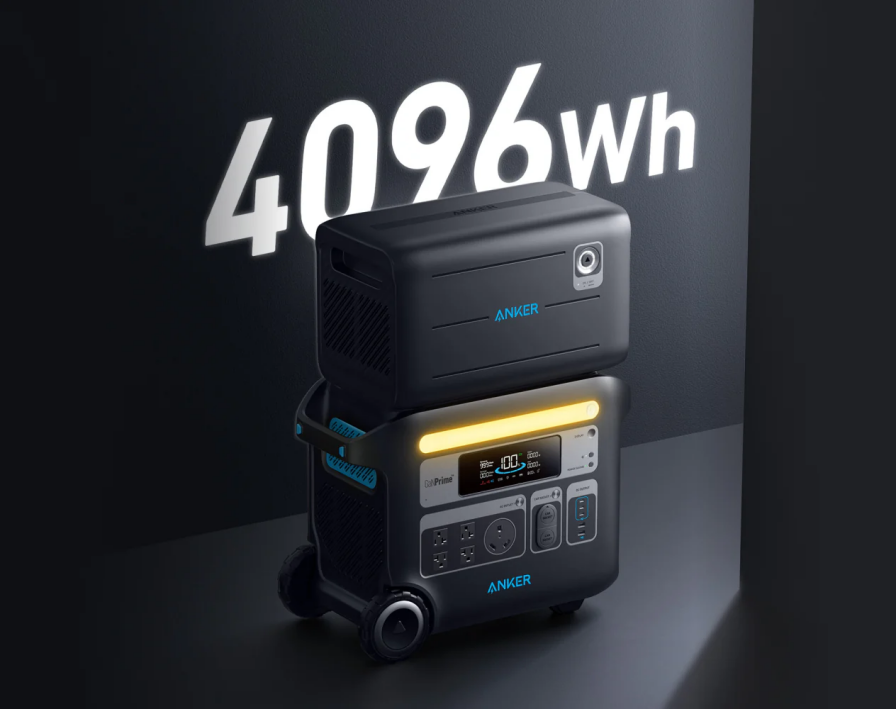
The solar input ceiling of any system sets the upper limit for how quickly sunlight can be converted into usable stored energy. This value governs everything from daily charging speed to off-grid autonomy. Users who rely on solar for home backup, outdoor travel, or field operations often notice that not all generators accept the same level of solar wattage. Some devices take in only a few hundred watts, while others—such as the Anker SOLIX F2000 Solar Generator paired with its 400W solar panel—are engineered to handle far more. Understanding what creates this ceiling helps users select the right system, optimize charging potential, and avoid mismatches between panels and generator capacity.
The Internal Architecture Behind Solar Input Limits
MPPT Controller Capacity Sets the Hard Technical Limit
Every solar generator relies on a Maximum Power Point Tracking (MPPT) controller to regulate incoming solar energy. This component determines how much wattage and voltage the generator can process without overheating or losing efficiency. If the MPPT controller supports a 1000W limit, no panel array can exceed that threshold in real-world charging. Designers choose MPPT specifications based on the generator’s expected use cases, battery capacity, and thermal tolerance. In the case of the Anker SOLIX F2000 Solar Generator + 400W Solar Panel, the system is engineered with a generous solar intake ceiling, enabling users to capture strong sunlight efficiently and repeatedly. This higher ceiling improves charging performance and supports energy independence for users with heavy daily loads.
Battery Chemistry and Charge Rate Define Safe Input Levels
Different battery types accept charging energy at different speeds. Lithium iron phosphate (LiFePO₄)—used in the Anker SOLIX F2000—supports a higher cycle life and stable charging behavior, but manufacturers still set limits to protect long-term performance. A battery’s charge rate, expressed as a C-value, controls how much power it can safely receive at once. If charging exceeds this limit, the battery may heat up, stress internal cells, or degrade faster over time. To prevent this, engineers balance the solar input ceiling with the battery’s chemistry and the system’s cooling design. A well-designed generator ensures steady intake even under strong midday sunlight, giving users reliable solar replenishment without compromising durability.
Circuit Design and Heat Management Enable Higher Solar Intake
Incoming solar energy passes through wiring, converters, and protective circuitry before reaching the battery pack. These components must handle high current and elevated temperatures during peak charging. If they are undersized or insufficiently cooled, the ceiling must be set lower. Premium systems use reinforced components, efficient heat sinks, and active cooling. The Anker SOLIX F2000’s thermal system—supported by smart temperature control and industrial-grade components—allows the generator to sustain strong solar intake more consistently. Stable heat management reduces throttling periods, meaning charging output stays closer to the ceiling rather than dropping during hot conditions. This results in more predictable energy capture throughout the day.
How Solar Input Ceilings Shape Real-World Charging?
Panel Configuration Must Align With System Capacity
Users often assume adding more panels will always increase charging power. However, the ceiling prevents excess wattage from entering the generator. If 1200W of panels feed a generator that can only accept 1000W, the system will cap intake at its predefined maximum. This is why choosing compatible solar panels—such as the 400W panel paired with the Anker SOLIX F2000 Solar Generator—ensures optimal charging without waste. Matching the system to its intended intake range keeps voltage, current, and efficiency within ideal operating levels. Users gain a streamlined setup that charges quickly yet safely, eliminating the need for complex series-parallel calculations.
See also: Financial Inclusion Through Technology
Environmental Conditions Interact With the Input Ceiling
Although the solar input ceiling is fixed, real-world charging depends heavily on sunlight intensity, panel temperature, and angle—factors that rarely remain stable throughout the day. A generator may be rated for 1000W solar input, but actual charging may fluctuate between 300W and 900W depending on conditions. Because panel output in variable environments rarely reaches full wattage, a higher ceiling gives the system room to take advantage of brief periods of strong sunlight. During clear midday conditions, the Anker SOLIX F2000’s ability to accept high solar wattage helps users recharge efficiently, especially when planning around limited daylight, remote work requirements, or emergency preparedness.
System Efficiency Dictates How Much of the Ceiling Is Usable
Electrical energy passes through multiple conversion stages—DC panel output, MPPT optimization, voltage regulation, and battery charging. Every stage introduces small efficiency losses. A generator with high internal efficiency can use more of the incoming wattage, making the solar input ceiling more meaningful. If efficiency is poor, part of that intake is lost as heat or waste. Well-engineered systems refine each step to preserve more of the captured solar power. The Anker SOLIX F2000 demonstrates this through its disciplined design: clean regulation, optimized circuitry, and stable thermal performance. Users experience charging speeds that closely track available sunlight, improving overall system dependability.
Conclusion
The solar input ceiling of a solar generator arises from a combination of technical, chemical, and environmental factors. MPPT controller specifications establish the electrical maximum, while battery chemistry and thermal design define what the system can safely sustain over thousands of cycles. Real-world performance also depends on panel compatibility, sunlight strength, environmental conditions, and overall system efficiency. Understanding these layers helps users build better energy strategies at home or outdoors. The Anker SOLIX F2000 Solar Generator + 400W Solar Panel benefits from a well-balanced design that takes full advantage of strong sunlight while protecting long-term performance. With the right knowledge—and the right portable solar generator—users gain faster, safer, and more predictable renewable energy.